The making of art is a complex practice informed both by a mindfulness of art history and one’s own experience as a vehicle for self-expression.

As a studio art major at Emmanuel, you will transform from “student of art” to “artist” and develop the creative, technical and conceptual aspects for both traditional and new media. Emmanuel’s broad array of studio courses including drawing, 2D and 3D design, ceramics, printmaking, photography, painting and digital media presents opportunities to develop the technical skills necessary for students to develop a personal vision and proficiency in their chosen medium.

A Best-in-Class Experience

Get to know the people and programs that will define your academic journey.

Meet the Faculty

Our distinguished faculty publish, exhibit and research. Present, compose and chair. Inspire and collaborate.

Course Requirements

View the 2024-2025 Academic Catalog to find course titles, numbers and descriptions.

Requirements for B.A. in Studio Art

  • ART1204 History of Western Art (AI-A) (VCI)
  • ART1401 Drawing I (AI-A) (VCI)
  • ART1407 Visual Language for Design and Communication (AI-A) (VCI)
  • ART2215 Modern Art (AI-A) (VCI)
  • ART2402 Drawing II (AI-A) (VCI)
  • ART2403 Design and Composition (AI-A) (VCI)
  • ART2433 3D Form Studies (AI-A) (VCI)
  • ART3403 Drawing III: Advanced Projects
  • ART4417 Senior Studio
  • Two electives selected in consultation with department advisor
  • Non-credit written thesis and senior exhibition

View the 2024-2025 Academic Catalog to find course titles, numbers and descriptions.

Requirements for a Minor in Studio Art

  • ART2215 Modern Art (AI-A)(VCI) or another art history course in consultation with art advisor
  • ART1401 Drawing I A(AI-A) (VCI)
  • ART2402 Drawing II (AI-A) (VCI)
  • ART2403 Design and Composition 

And two of the following: 

  • ART2411 Introduction to Printmaking 
  • ART3101 Painting 
  • ART3403 Drawing III: Advanced Projects 

The studio art program is designed to:

  • Introduce and develop the conceptual and technical aspects of the studio arts in both traditional and new media
  • Guide students in choosing their appropriate medium and developing the technical and conceptual proficiency in that medium
  • Develop the ability to evaluate artwork through art history courses, class critiques, writing, and viewing original works in museums, galleries and artists' studios
  • Prepare students to pursue their own creative direction in the future

What can I do with a degree in studio art?

A major in studio art can provide you with a wide range of skills and experiences that can be applied to various careers in the creative field. Here are some career options for studio art graduates:

  • Fine Artist: As a fine artist, you would create original artwork for sale or exhibition in galleries, museums, and other venues. You would use a variety of media, such as painting, sculpture, drawing, and photography, to express your ideas and emotions.
  • Art Teacher/Professor: With a degree in studio art, you could pursue a career as an art teacher, teaching students of all ages and skill levels. You could teach at the elementary, middle, or high school level, or pursue a career teaching at the college or university level.
  • Graphic Designer: Graphic designers use visual elements to communicate messages and ideas through various media, such as print and digital advertising, website design, and branding. Your skills in drawing, color theory, and composition would be valuable in this field.
  • Art Director: Art directors oversee the visual style and direction of a project, such as a film, television show, or advertising campaign. With a degree in studio art, you could pursue a career as an art director, managing the visual elements of a project and working closely with other members of the creative team.
  • Art Therapist: Art therapists use art as a tool for therapy, helping clients to explore and express their emotions and experiences through various media. Your skills in drawing, painting, and sculpture could be used to help clients work through psychological and emotional issues.
  • Museum Curator: As a museum curator, you would be responsible for selecting and organizing exhibits, managing collections, and conducting research. Your knowledge of art history and experience creating artwork would be valuable in this field.

Employers in the arts industry look for a combination of technical and soft skills when considering candidates with an art degree. Here are some of the skills that are highly valued:

  • Creativity: The ability to think creatively and outside the box is essential in the arts industry. Employers look for candidates who can come up with unique ideas and solutions.
  • Technical skills: Depending on the specific field, employers look for candidates with strong technical skills in various areas such as drawing, painting, sculpture, photography, or digital design.
  • Attention to detail: Attention to detail is critical in the arts industry, especially when it comes to executing specific instructions, following brand guidelines, or working on a project with a tight deadline.
  • Communication skills: Effective communication skills are essential in the arts industry, whether you're collaborating with a team, working with clients, or presenting your work to an audience.
  • Time management: Employers look for candidates who can manage their time effectively and prioritize tasks, especially when working on multiple projects simultaneously.
  • Adaptability: The ability to adapt to new technologies, software, or mediums is essential in the constantly evolving arts industry.
  • Problem-solving skills: Employers value candidates who can think critically and solve problems, whether it's related to technical issues or creative challenges.
  • Collaborative skills: Collaboration is a crucial aspect of many creative projects, so employers look for candidates who can work well with others, share ideas, and give and receive constructive feedback.
Where Essential Values and Skills Meet the Real World

Where Essential Values and Skills Meet the Real World

Along with areas of knowledge and major requirements, you will cultivate essential values in the classroom and complete two courses in each area:

  • Social Justice (SJ): Develop knowledge, skills, values and motivation to participate beneficially in activities of personal and public concern.
  • Diversity & Multiculturalism (DM): Understand the complexity of identity the historical truths of different cultural perspectives to address bias and examine contemporary social issues. 

One hundred percent of Emmanuel students complete an internship as part of the core curriculum. In a city as dynamic as Boston, your options are bound only by the limits of your curiosity.

Students from the Art Department intern at nearby cultural organizations such as the Museum of Fine Arts, in graphic, product and user experience design at top companies such as Converse, 47 Brands, PUMA and area design agencies, and in art therapy departments at area medical institutions.
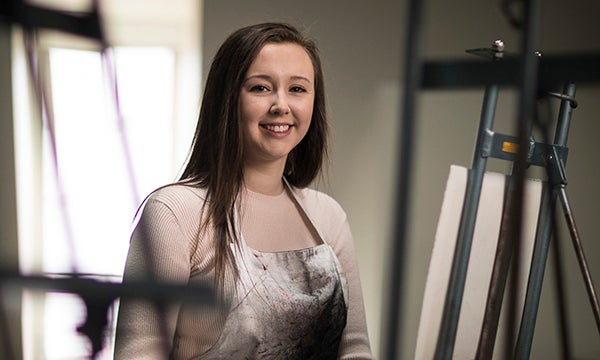
In all majors, the Capstone Experience involves completing a significant piece of work that requires the integration and application of learning from multiple courses.

In addition to their senior thesis, which explores topics ranging from user experience in app development, issues in two- and three-dimensional design or standard practice in the field of art therapy, art majors must also take part in the senior exhibition, in which their work is presented to a panel of art faculty.