Posted On
Topics
Rankings, Awards, & Honors
Share


The Emmanuel Biology Department has earned a gold medal rating from the nationally recognized PULSE (Partnership for Undergraduate Life Sciences Education) organization.
The recognition follows a comprehensive department review by the PULSE Recognition Program earlier this year. Supported by the National Science Foundation, the Recognition Program is a guided self-assessment process that uses 78 criteria to help undergraduate programs evaluate their integration of best practices in six key areas: curriculum, assessment, faculty, infrastructure, building community, and climate for change.
In its site visit report, PULSE praised the Emmanuel Biology Department for its inclusivity, student-centered teaching, and high impact learning experiences.
“From the viewpoint of the site visitors, the faculty and students have much to be proud of," said the report. “Overall, graduates are gaining both valuable content knowledge and transferable skills. The work accomplished through Emmanuel’s HHMI Inclusive Excellence award is probably the best equity work the site visitors have seen from colleges participating in the PULSE Recognition Program. "
Making Biology Inclusive

Emmanuel’s participation in the evaluation was led by Associate Professor of Biology Dr. Anupama Seshan, who is also Chair of the Biology Department. She described it as a team effort, with the entire department participating in the self-study. Senior Lecturer of Biology Dr. Lynn Atkinson and Associate Professor of Biology Dr. Jason Kuehner were instrumental in leading the reflection efforts.
While the PULSE recognition was gratifying, Dr. Seshan said it also helps focus improvement efforts by providing benchmarks and specific recommendations.
Making the Biology program more inclusive was a key goal following the previous evaluation in 2020, and one focus was fine-tuning the introductory experience for new student scientists. In practice, that meant cultivating a departmental mindset focused on student assets and interests; where everyone is engaged and excited about the work they’re doing. The PULSE report praised those efforts, saying "the Department's commitment to evidence-based inclusive practices sets a standard that few institutions have reached and ensures a strong, positive trajectory for future institutional innovation."
“Our focus has been on broadening participation in science; creating a culture where everyone feels that they belong, where students are expected to succeed and have access to the resources they need,” said Dr. Seshan. "We were thrilled to learn that the PULSE reviewers recognized our approaches to fostering student success as innovative and effective."
One example is the CURE (Course-Based Undergraduate Research Experience) program, which helps establish a sense of belonging early. Established in 2021, CURE has an introductory course that gets first-year students into the lab and contributing as part of a research team right away. That emphasis on students as active contributors continues with the Experimental Biology course.
“In Experimental Biology, student scientists effectively become members of the instructor's research group, working on a project that the faculty member is passionate about,” said Dr. Seshan. “It really brings students into that experience of getting to be part of a team that is working on a common goal.”
The CURE research experience is embedded into the core curriculum of the Biology Department; ensuring all students who graduate the program have at least two units of hands-on laboratory experience that explores real-world questions and concerns.
Praise for a Well-Aligned Curriculum
The Biology Department also scored well on curriculum. In addition to praising the emphasis on research, PULSE was impressed with the innovative Project CERTI (Certified Employment Ready Training Initiative) program, which provides workforce-aligned credentials in specific lab techniques and experiences. Available through biology coursework or as stand-alone modules, CERTI provides resume-ready verification of competencies that are in-demand from employers.
“They loved that,” said Dr. Seshan. “They were impressed and excited about this opportunity for students to gain practical and professional experience through the curriculum.”
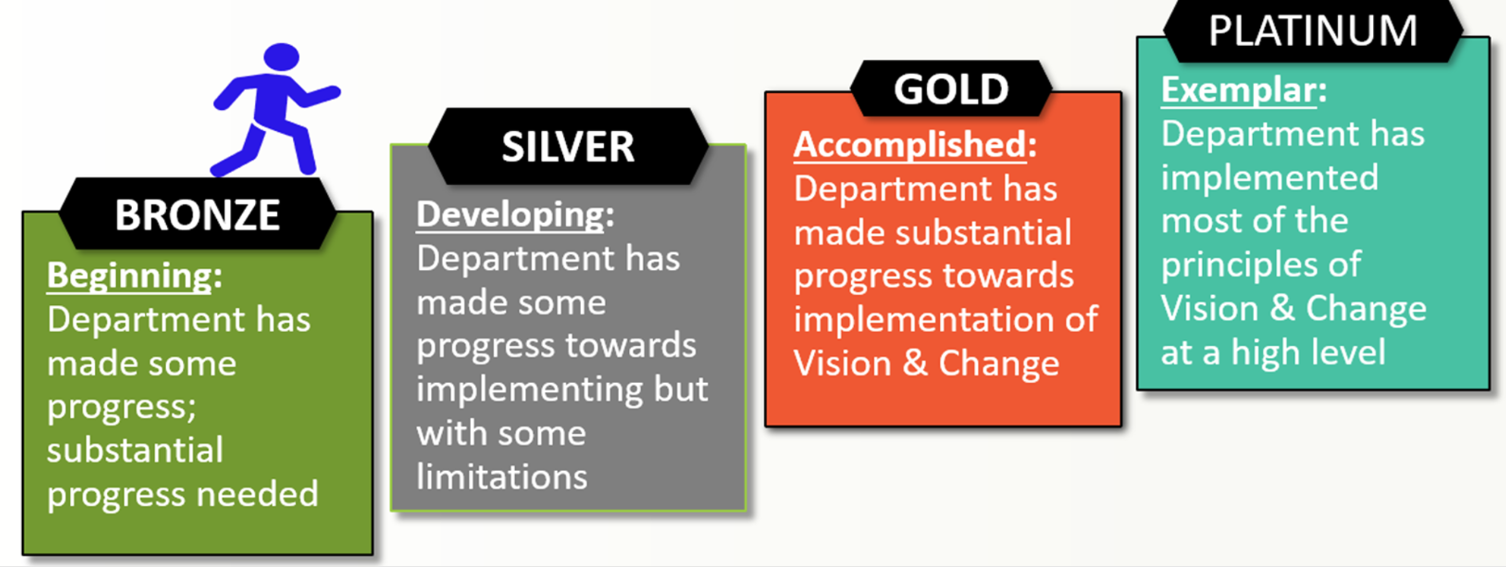
The Gold rating earned by the Biology Department is the second highest PULSE rating possible. It signifies that the department has made substantial progress towards implementing the principles outlined in the AAAS Vision & Change narrative. Now, faculty in the department have their sights set on the highest achievement level: Platinum.
“They appreciated our focus on outcomes but also wanted more assessments to gauge student learning gains at various junctures in their journey towards degree completion,” said Dr. Seshan. “We are going to pilot one of the examinations that they recommended to help get those measurements. We’re looking ahead to platinum; we’re always going to take that next step.”
School of Science & Health Dean Dr. Pádraig Deighan described the award as outstanding news, and something the entire school can be proud of.
“This recognition affirms Emmanuel College’s commitment to high-quality, inclusive undergraduate science education,” said Dr. Deighan. “It also highlights the Biology Department as a national model for how teaching-focused institutions can translate educational reform into real outcomes for student scientists.”